
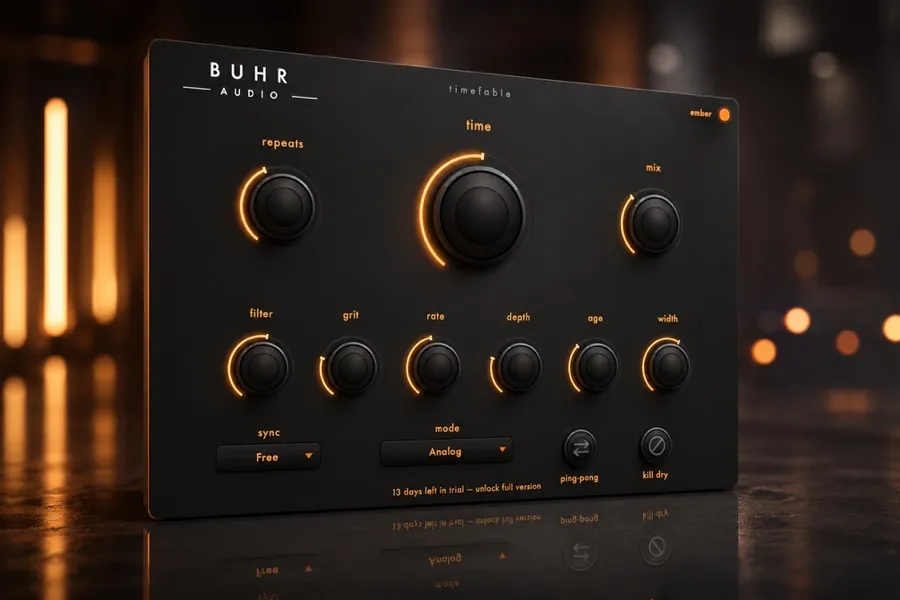
Slapback is a single, fast echo — roughly 60–140 ms with little or no feedback. It thickens vocals and guitars and adds vintage attitude without washing the track out. Set one repeat, a short time, zero-to-low feedback, and roll off some highs for that tape slap. An analog-style delay like TimeFable nails the darkened, saturated tone.
What is slapback delay?
Slapback is a single, quick echo that follows the original sound so closely it reads as thickness and energy rather than a distinct repeat. It was born on 1950s rock and roll and rockabilly records — think the doubled, springy vocals and guitars of that era — and it has never left popular music since. Unlike a long, rhythmic delay, slapback adds attitude and depth while staying tight and upfront.
The three settings that matter
Slapback lives and dies on three controls:
- Time
- 60–140 ms. Shorter (60–90 ms) is tighter and more 'doubled'; longer (110–140 ms) is springier and more obvious.
- Feedback
- 0–15%. You want essentially one repeat. More than that and it stops being slapback.
- Tone / high-cut
- Roll the top off the repeat so it sits behind the dry sound. This is the vintage tape character.
- Mix
- Blend to taste — usually 15–35% wet so the echo supports rather than dominates.
Slapback on vocals
On vocals, slapback adds size and a retro edge without the smear of reverb. Keep the time short and the repeat slightly darker and quieter than the dry vocal. It is a fantastic alternative to doubling when you want energy but not a full chorus effect. Pair it with a touch of plate reverb for a classic lead-vocal sound.
Slapback on guitars
Electric guitars and slapback are a match made in heaven — country, rockabilly and surf all rely on it. A slightly longer time (around 120 ms) with a darkened tail gives that bouncy, springy push. Because the repeat is so short, it keeps fast picking clear instead of turning it to mush.
Why analog slapback sounds better
The original slapback sounds came from tape machines, so the echo was never a clean copy — it was darker, slightly saturated and gently unstable. A digital delay set to 100 ms will give you the timing, but an analog-modelled delay gives you the character that makes slapback feel vintage. More on the differences in tape vs BBD vs digital delay.
Try TimeFable
Warm tape and BBD-style analog delay with hands-on modulation and character. $4 one-time. AU and VST3 for macOS and Windows.
Get TimeFableFAQ
What delay time is slapback?
How much feedback should slapback have?
Should slapback be mono or stereo?
Written by Reinhardt Buhr, a Hamburg-based live-looping multi-instrumentalist and the developer behind Buhr Audio. TimeFable is his analog-modelled delay, built for exactly this kind of vintage tone — try it free here.